
About Us
The SARVAC Canine Team is a new division of the Search and Rescue Volunteer Association of Canada, established in 2025. Search and rescue canines play a vital role in ground search and rescue operations, helping teams locate missing persons, identify important clues, and support response efforts across a wide range of environments.
The program was developed to promote consistent, high-quality practices for the training, evaluation, and deployment of search and rescue canine teams across Canada. It establishes national standards and evaluation processes used to determine whether a canine team is ready to operate in real-world search and rescue situations under SARVAC.
Search Profiles
SARVAC K9 teams are trained and evaluated across a range of search and rescue environments. Each profile represents a different type of search scenario that canine teams may encounter in real-world operations.
TRACKING (Wilderness)
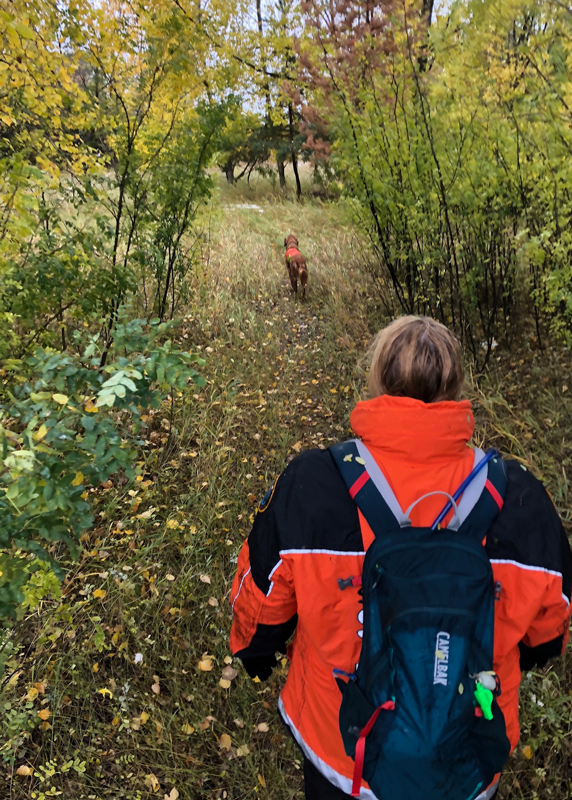
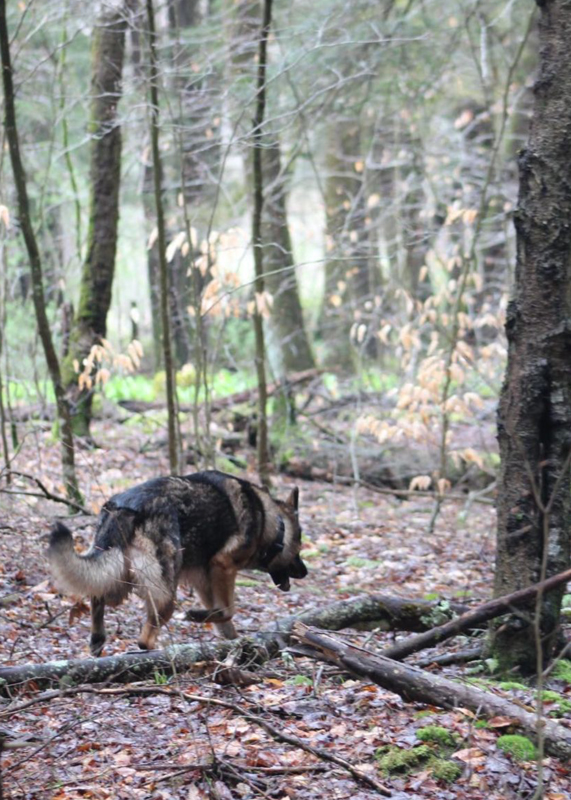
Tracking dogs follow the exact trail left behind by a missing person. Using scent left on the ground, vegetation, and surrounding surfaces, the canine works with their handler to determine the person’s direction of travel and follow the track through terrain such as forests, trails, or rural environments.
LIVE FIND (Wilderness)
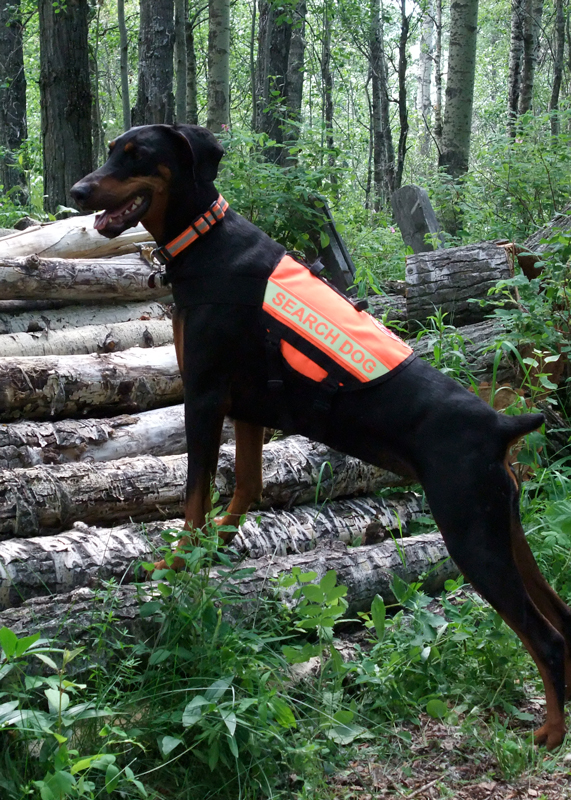
Live Find dogs search large outdoor areas to locate a missing person who may still be alive. Rather than following a track, these dogs use airborne scent carried by the wind to detect human scent and guide their handler to the subject.
ARTICLES
In an article search, the canine team looks for items connected to a missing person, such as clothing or personal belongings. These items can provide valuable clues during search operations and may help determine the direction or location of the individual.
Human Remains Detection – Land
Human Remains Detection (HRD) dogs are trained to locate the scent of human remains on land.
- Small Area Wilderness – focused searches in smaller outdoor areas such as forest clearings or specific locations of interest.
- Large Area Wilderness – broader searches across larger landscapes where remains may be more widely dispersed.
These teams are often used to support law enforcement or recovery operations.
Human Remains Detection – Building
These canine teams search inside buildings or structures, such as houses, warehouses, or abandoned properties. Dogs are trained to detect human remains in complex indoor environments with multiple rooms and confined spaces.
Human Remains Detection – Urban / Industrial
In this profile, canine teams work in urban or industrial environments, such as construction areas, vehicle yards, or infrastructure sites. These environments may contain a wide variety of materials and scents, requiring highly trained detection dogs.
Human Remains Detection – Water
Water search teams assist in locating human remains in or near water environments.
These searches may include:
- Shoreline searches, where dogs work along rivers, lakes, or coastal areas.
- Open water searches, where the canine may work from a boat to detect scent rising from below the water’s surface.
Human Remains Detection – Land
Human Remains Detection (HRD) dogs are trained to locate the scent of human remains on land.
- Small Area Wilderness – focused searches in smaller outdoor areas such as forest clearings or specific locations of interest.
- Large Area Wilderness – broader searches across larger landscapes where remains may be more widely dispersed.
These teams are often used to support law enforcement or recovery operations.
Human Remains Detection – Building
These canine teams search inside buildings or structures, such as houses, warehouses, or abandoned properties. Dogs are trained to detect human remains in complex indoor environments with multiple rooms and confined spaces.
Human Remains Detection – Urban / Industrial
In this profile, canine teams work in urban or industrial environments, such as construction areas, vehicle yards, or infrastructure sites. These environments may contain a wide variety of materials and scents, requiring highly trained detection dogs.
Human Remains Detection – Water
Water search teams assist in locating human remains in or near water environments.
These searches may include:
- Shoreline searches, where dogs work along rivers, lakes, or coastal areas.
- Open water searches, where the canine may work from a boat to detect scent rising from below the water’s surface.
Disaster Response
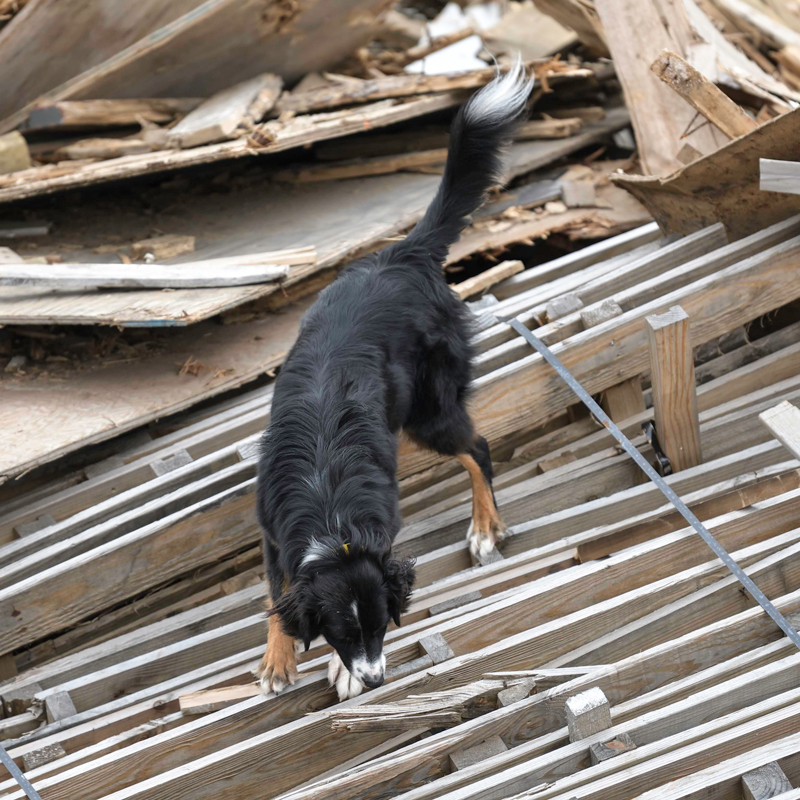
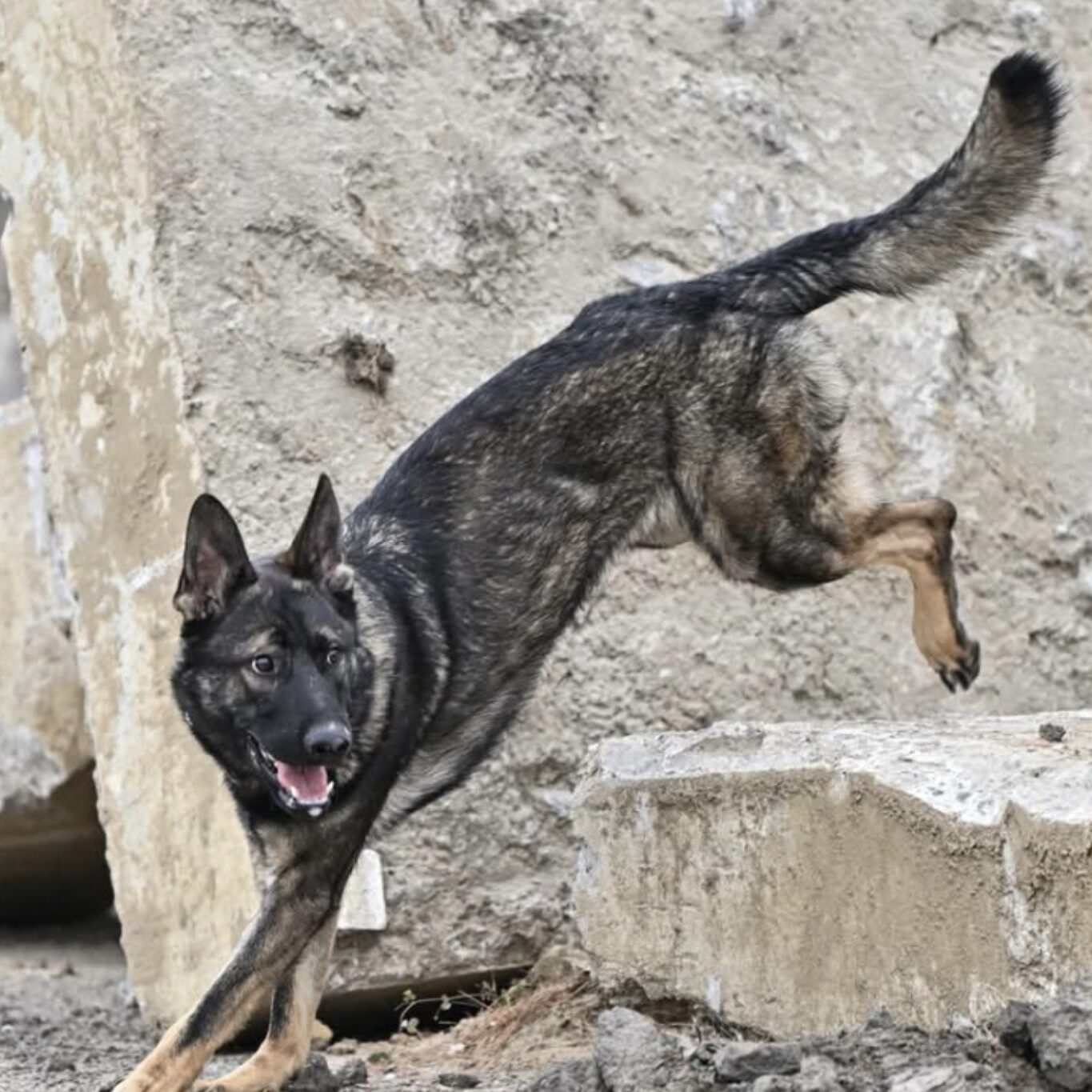
Disaster response canine teams operate in complex emergency environments, such as collapsed buildings, avalanches, or other large-scale incidents. These teams support emergency responders in locating survivors or human remains.
Disaster response profiles may include:
- Live Find – locating survivors trapped in debris or collapsed structures.
- Human Remains Detection – assisting in recovery operations following disasters.
- Snow – locating individuals or items buried beneath significant snow, such as in avalanche scenarios.
Search Profiles
SARVAC K9 teams are trained and evaluated across a range of search and rescue environments. Each profile represents a different type of search scenario that canine teams may encounter in real-world operations.
TRACKING (Wilderness)
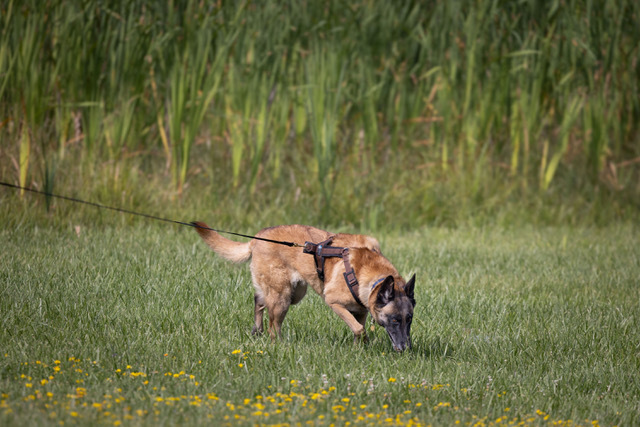
Tracking dogs follow the exact trail left behind by a missing person. Using scent left on the ground, vegetation, and surrounding surfaces, the canine works with their handler to determine the person’s direction of travel and follow the track through terrain such as forests, trails, or rural environments.
LIVE FIND (Wilderness)
Live Find dogs search large outdoor areas to locate a missing person who may still be alive. Rather than following a track, these dogs use airborne scent carried by the wind to detect human scent and guide their handler to the subject.
ARTICLES
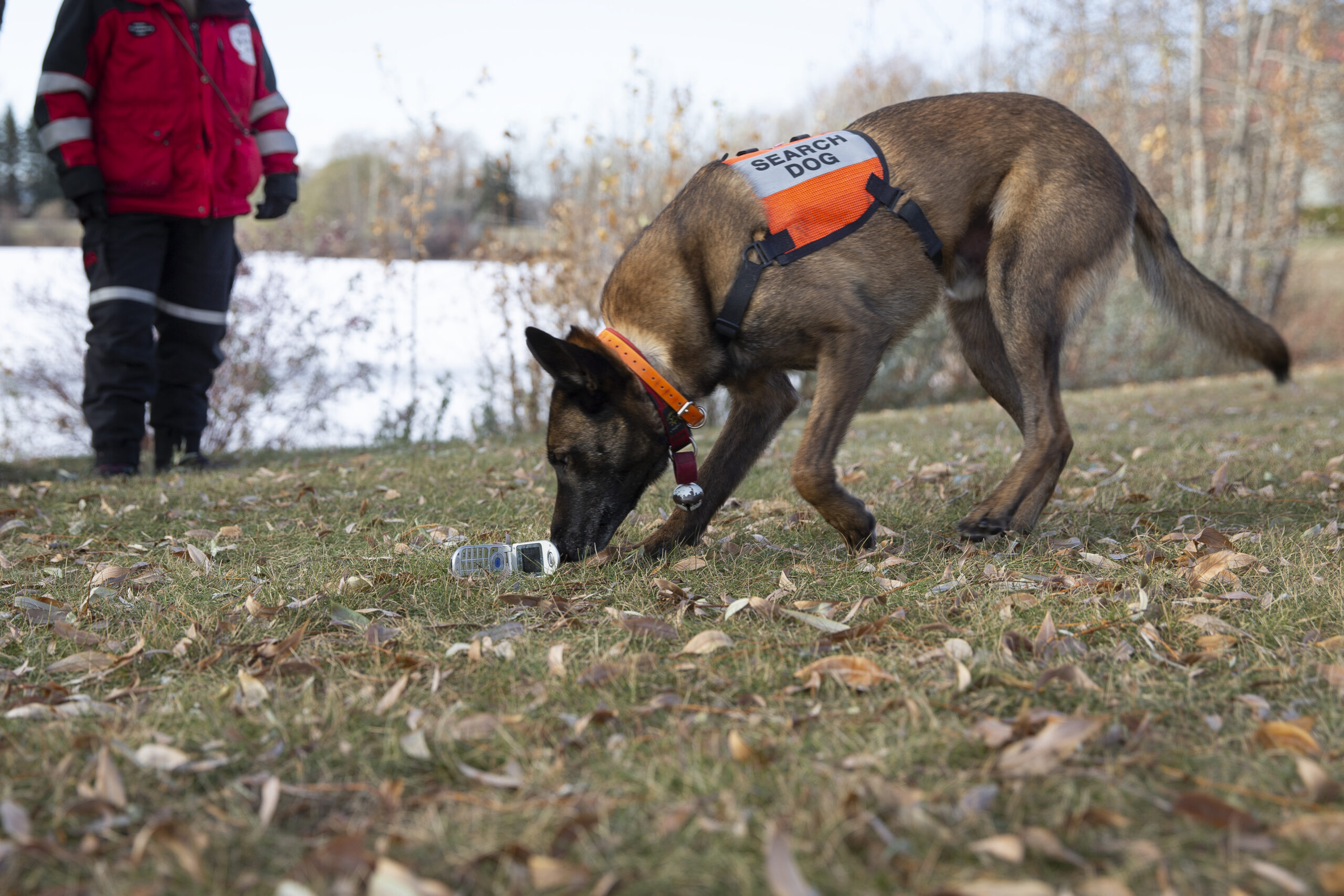
In an article search, the canine team looks for items connected to a missing person, such as clothing or personal belongings. These items can provide valuable clues during search operations and may help determine the direction or location of the individual.
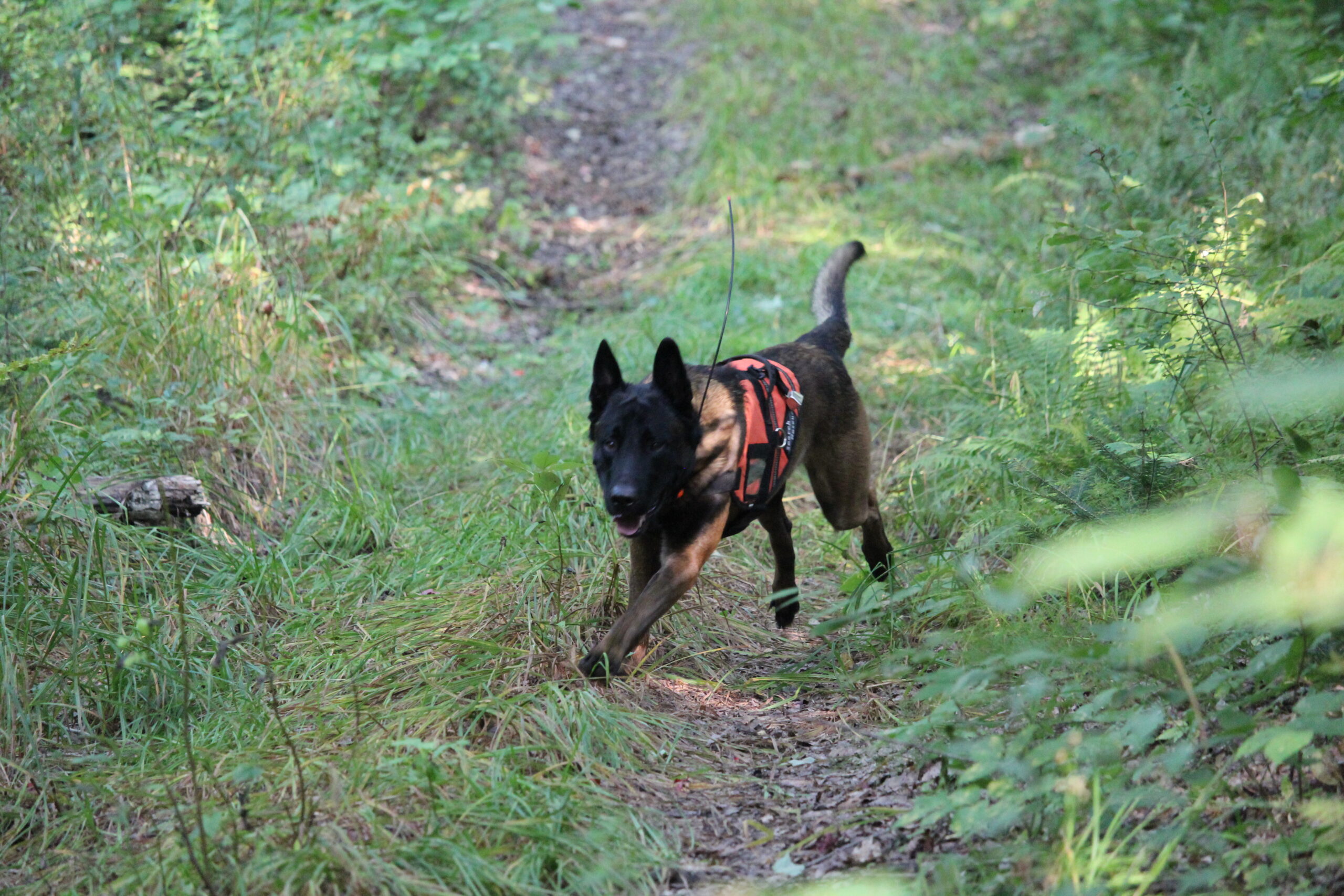
Human Remains Detection – Land
Human Remains Detection (HRD) dogs are trained to locate the scent of human remains on land.
These searches may occur in a variety of environments, including:
- Small Area Wilderness – focused searches in smaller outdoor areas such as forest clearings or specific locations of interest.
- Large Area Wilderness – broader searches across larger landscapes where remains may be more widely dispersed.
These teams are often used to support law enforcement or recovery operations.
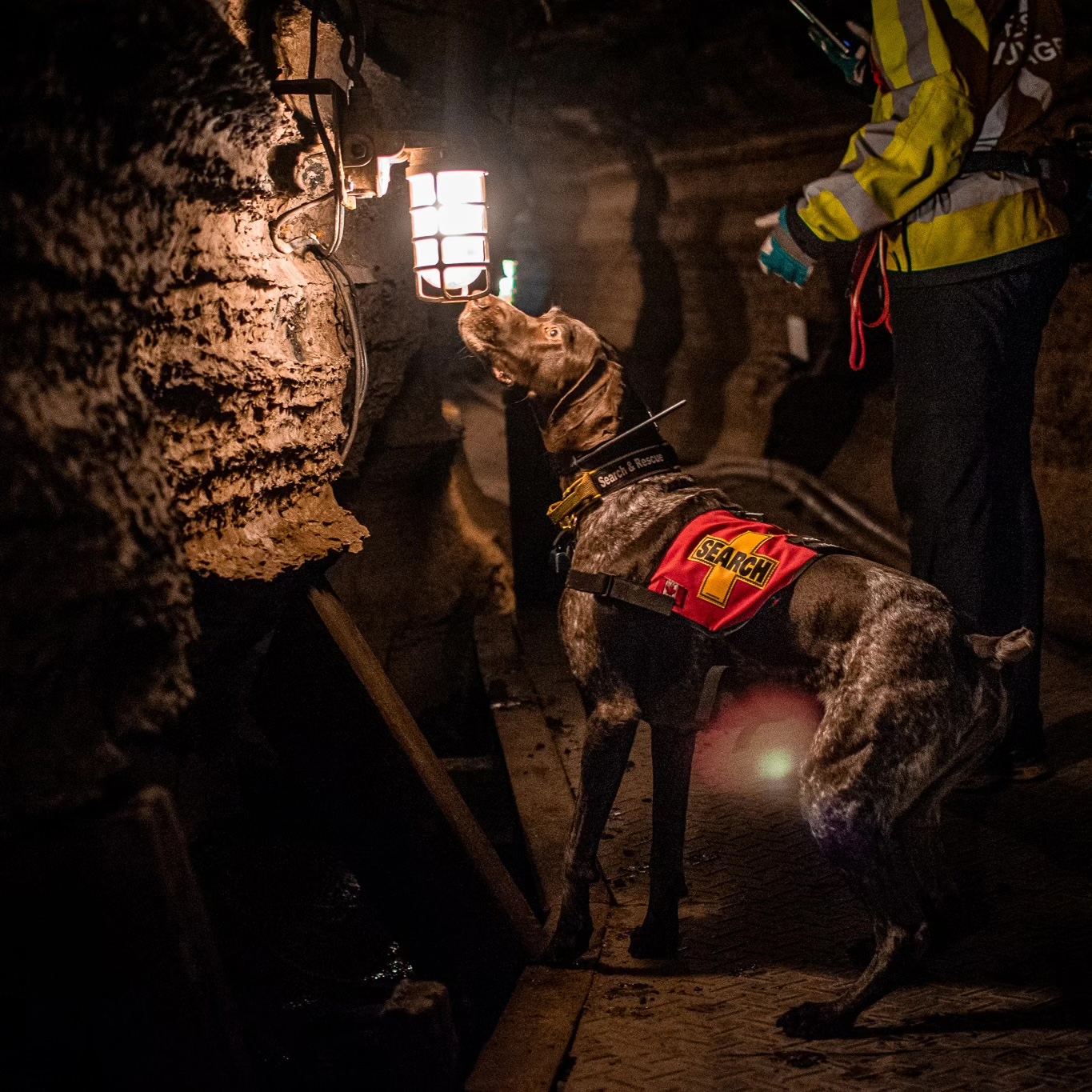
Human Remains Detection – Building
These canine teams search inside buildings or structures, such as houses, warehouses, or abandoned properties. Dogs are trained to detect human remains in complex indoor environments with multiple rooms and confined spaces.
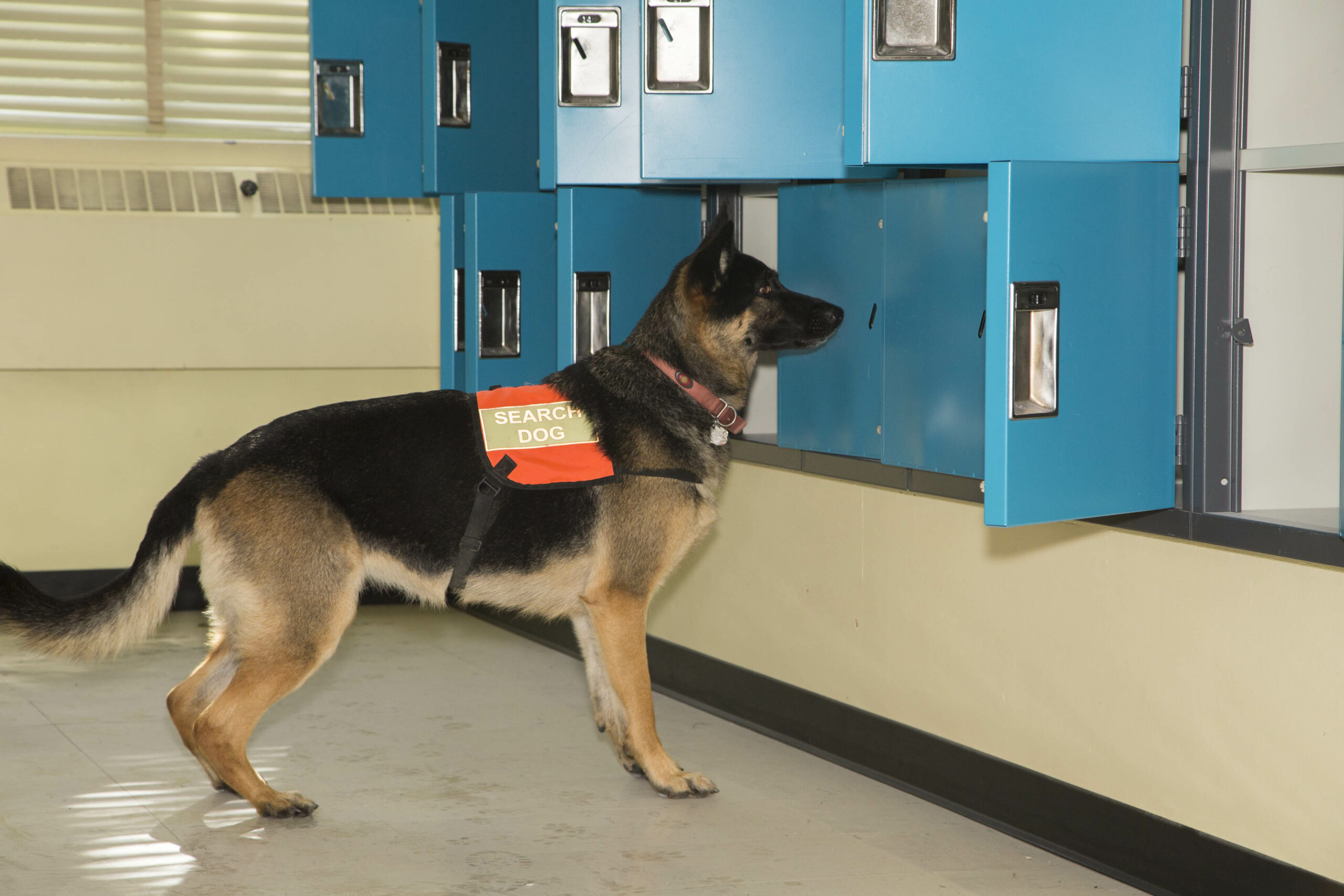
Human Remains Detection – Urban / Industrial
In this profile, canine teams work in urban or industrial environments, such as construction areas, vehicle yards, or infrastructure sites. These environments may contain a wide variety of materials and scents, requiring highly trained detection dogs.
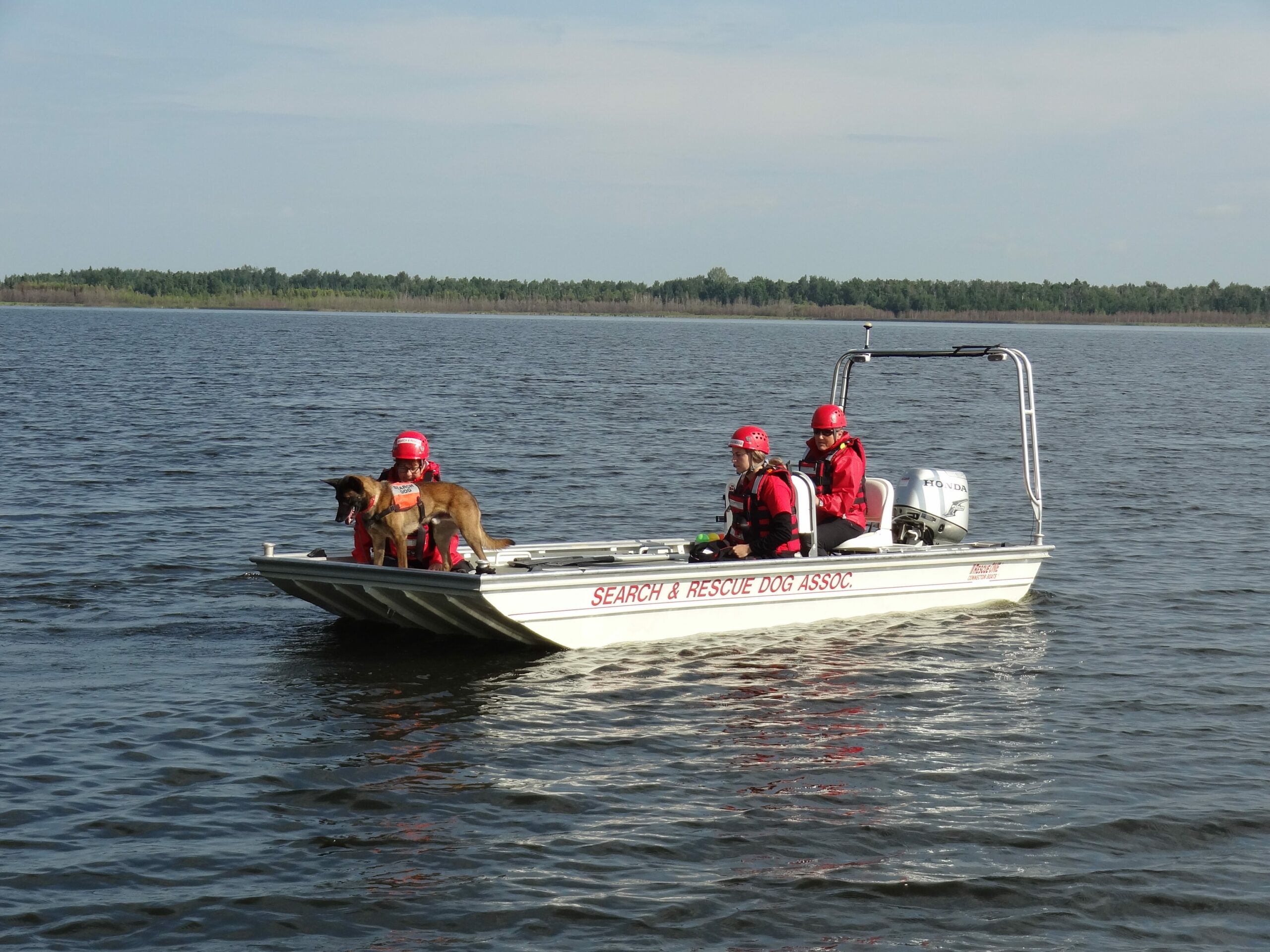
Human Remains Detection – Water
Water search teams assist in locating human remains in or near water environments.
These searches may include:
- Shoreline searches, where dogs work along rivers, lakes, or coastal areas.
- Open water searches, where the canine may work from a boat to detect scent rising from below the water’s surface.
Disaster Response
Disaster response canine teams operate in complex emergency environments, such as collapsed buildings, avalanches, or other large-scale incidents. These teams support emergency responders in locating survivors or human remains.
Disaster response profiles may include:
- Live Find – locating survivors trapped in debris or collapsed structures.
- Human Remains Detection – assisting in recovery operations following disasters.
- Snow – locating individuals or items buried beneath significant snow, such as in avalanche scenarios.